ServicesEnergy Efficient Windows
Energy Efficient Windows in Garden Grove
We swap old single-pane and failing dual-pane units for windows built to block summer heat and hold steady indoor temperatures. Before you buy anything, we check whether your current windows are the real problem or whether attic insulation or air leaks are doing the damage.
What Makes a Window Energy Efficient
An efficient window is a system, not just a second pane. Two panes of glass are separated by a sealed space filled with argon gas, which slows heat transfer better than air. A microscopically thin low-E coating on one glass surface reflects infrared heat while letting visible light through. A warm-edge spacer keeps the pane edges from acting as a cold or hot bridge, and a multi-chambered vinyl frame stops heat that aluminum frames conduct straight into the room.
Two numbers on the NFRC label tell you how a window performs. U-factor measures how much heat passes through; lower is better. Solar heat gain coefficient, or SHGC, measures how much sunlight turns into heat inside; for a cooling-dominated climate like ours, a low SHGC matters most. California's Title 24 energy standards set limits on both for replacement windows, and every unit we install meets them.
We will not sell you new glass you do not need. If your windows are already dual-pane with intact seals and your rooms still bake, we will tell you to look at attic insulation or duct leaks first. When the windows are the weak point, we explain which upgrade gets you the most for the money.
What's Included in the Work
Glass package selection
We choose the low-E coating and SHGC by orientation. West- and south-facing openings that take hard afternoon sun get a lower SHGC than a shaded north wall.
Measurement and frame inspection
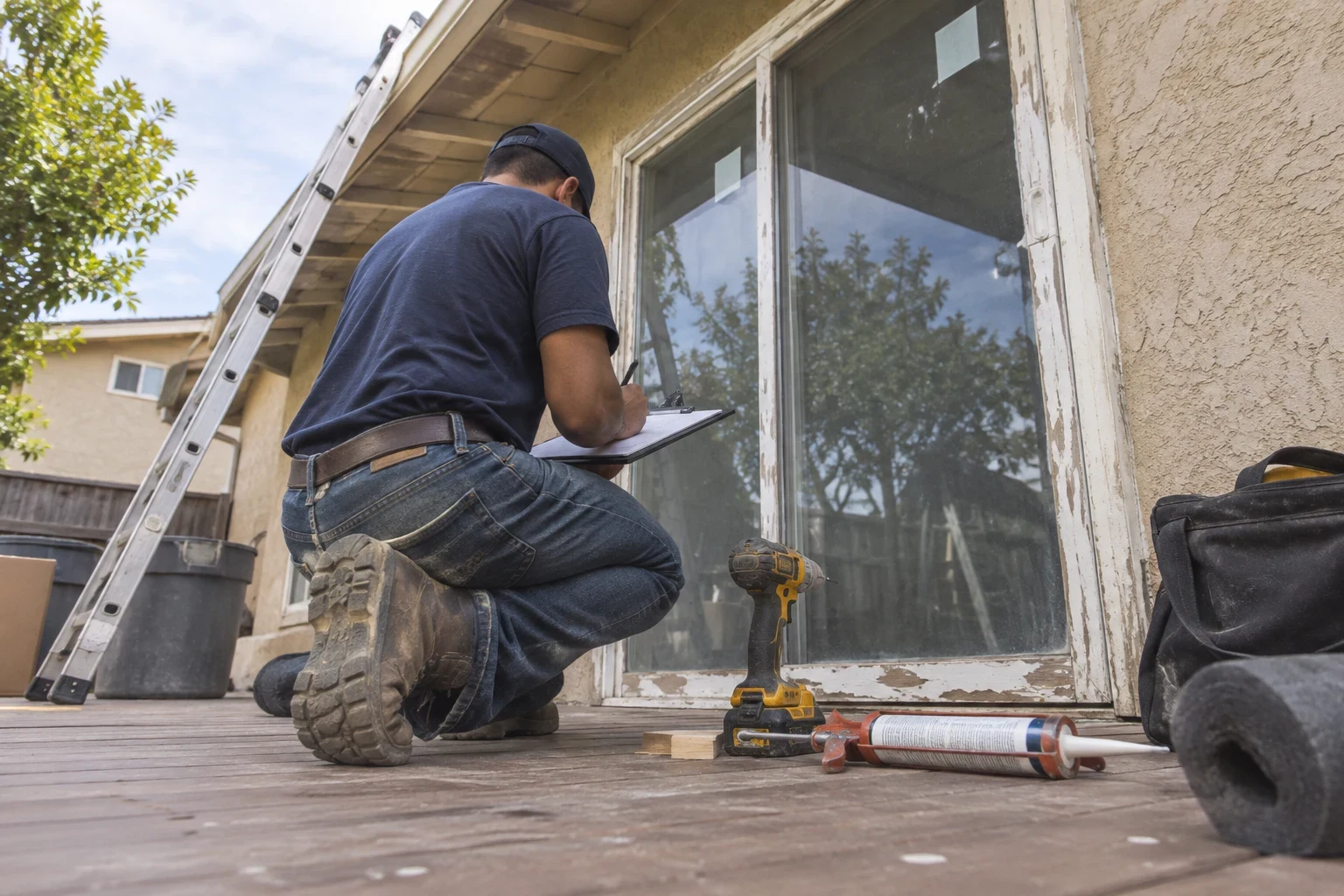
We measure each opening and check the existing frame for rot, warping or corrosion. That inspection decides whether an insert retrofit works or the full frame has to come out.
Installation and air sealing
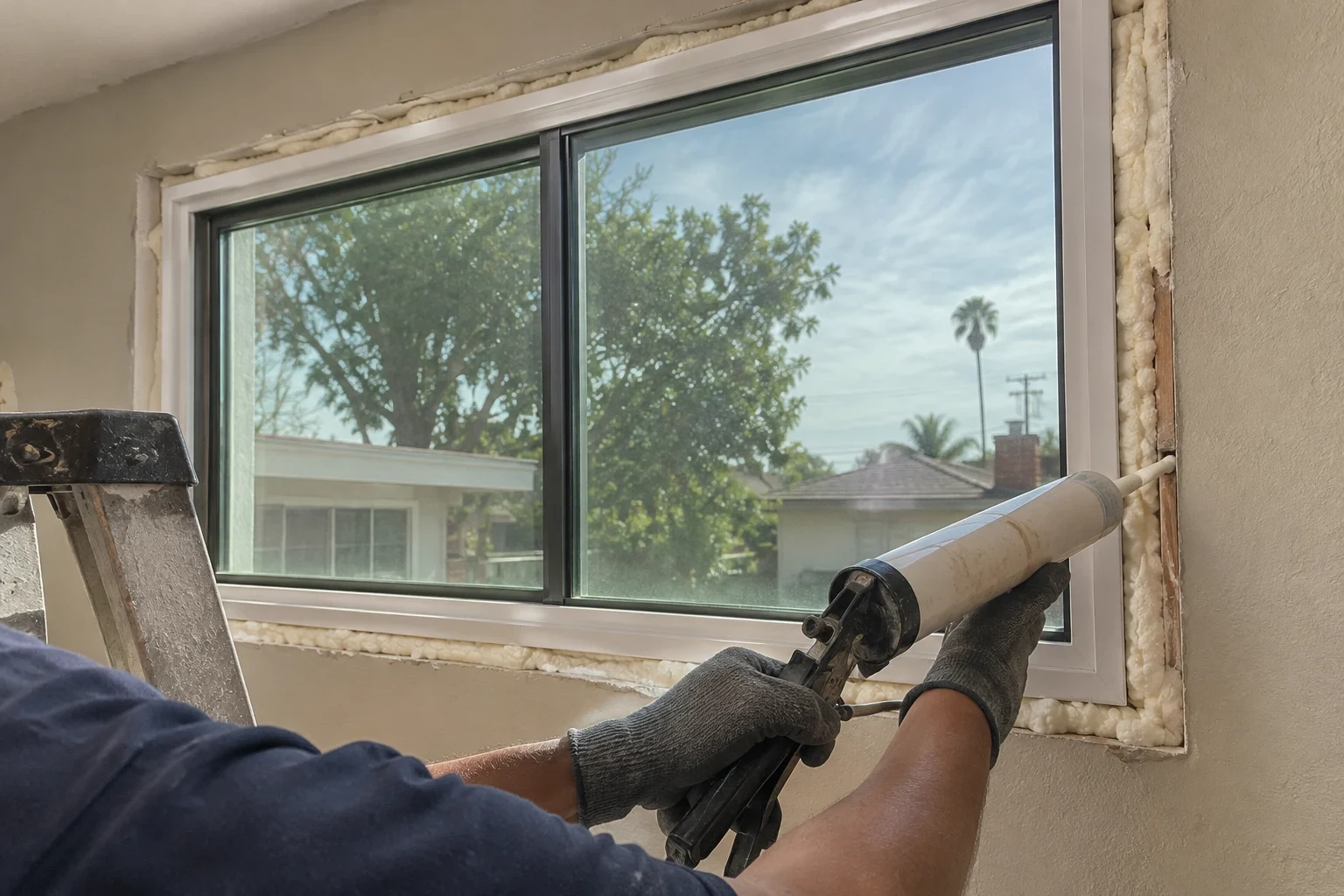
The new unit is set level and square, shimmed, then sealed with low-expansion foam and exterior sealant. A high-performance window installed with gaps around it leaks as much air as the old one.
Crystal Pacific products
We are an authorized Crystal Pacific Windows installer, so the units we order come with the manufacturer's specs and NFRC ratings documented for your records.
Permit and cleanup
We pull the permit where the city requires one, haul away the old units and glass, and vacuum the work area before we leave.
Signs Your Windows Are Costing You Energy
- Single-pane aluminum frames
- Many homes built in the 1950s and 1960s still have original aluminum sliders. Aluminum conducts heat quickly, and single-pane glass offers almost no resistance to it.
- Fog between the panes
- Moisture or haze trapped inside a dual-pane unit means the edge seal has failed. The argon has escaped, and the window now insulates little better than a single pane.
- Rooms that overheat by afternoon
- If one side of the house runs several degrees warmer than the rest, the glass on that side is likely letting in solar heat. Low-E glass with the right SHGC targets exactly this.
- Drafts and whistling
- Worn weatherstripping and shrunken frames let conditioned air out. Hold a lit incense stick near the sash on a breezy day; if the smoke moves, air is moving.
- Faded floors and furniture
- Ultraviolet light passing through plain glass bleaches fabric and wood. Modern low-E coatings block most UV along with the heat.
How an Energy Upgrade Project Runs
- 1
In-home assessment
We walk each room, note which way the windows face, check for seal failure and look at frame condition. You get a plain explanation of what is worth replacing and what is not.
- 2
Written estimate
The estimate lists each window, its size, glass package and whether it is an insert or full-frame install, so you can compare line by line.
- 3
Manufacturing and scheduling
Custom-sized units are ordered to your exact openings. We set an install date once they arrive and confirm it with you ahead of time.
- 4
Installation day
We lay drop cloths, remove old sashes and frames as planned, set and seal the new windows, and check that every sash opens, closes and locks smoothly. Most homes are done in a day.
What Affects the Cost of Energy Efficient Windows
Price depends mostly on how many windows you replace and what kind of install each opening needs. Glass options and frame condition move it next. Your written estimate breaks out each of these so nothing shows up later as a surprise.
- Insert versus full-frame
- An insert retrofit keeps the existing frame and costs less in labor. A full-frame install is needed when the old frame is damaged or out of square, and it involves more stucco and trim work.
- Window size and style
- Large picture windows and oversized sliders need heavier glass and more handling. Specialty shapes cost more to manufacture than standard rectangles.
- Glass package
- Upgraded low-E coatings, laminated glass for sound control or tempered glass required near doors and floors each change the unit price.
- Number of windows
- Ordering several windows at once spreads setup and travel across the job, which lowers the effective cost per opening.
Energy Efficient Windows FAQ
- Will new windows really lower my electric bill?
- They can, especially if you are replacing single-pane aluminum windows on sun-facing walls. Savings depend on how much glass you have, which way it faces and how well the rest of the house is insulated. If your attic or ducts are the bigger leak, we will say so before you spend money on windows.
- Is argon gas worth it, or is it just a marketing feature?
- Argon is denser than air, so it slows heat moving between the panes. It adds little to the cost and is standard on most quality dual-pane units. The low-E coating usually does more of the work, but the two together give the best U-factor.
- Do I need triple-pane glass here?
- For most homes in our mild climate, a well-specified dual-pane window with the right low-E coating meets energy code and performs well. Triple-pane adds weight and cost, and it pays off mainly in cold climates or where sound control is the goal.
- Can you replace just the foggy windows?
- Yes. We can replace only the units whose seals have failed. We will point out that matching frame color and sightlines with your existing windows matters, so you know how the new and old units will look side by side.
- What protects me if something goes wrong during the install?
- We are bonded and insured, and our coverage totals $2 million for the work we do at your home. That covers the job from the moment the old sashes come out until the new windows are sealed and the area is cleaned up.
Find Out Which Windows Are Worth Upgrading
We will check your seals, frames and sun exposure and tell you honestly where new glass pays off. Estimates are free, with no sales pressure or obligation.